Java Books
Learning gives creativity; creativity leads to thinking; thinking provides knowledge; knowledge makes you great.
Effective Java Third Edition by Joshua Bloch
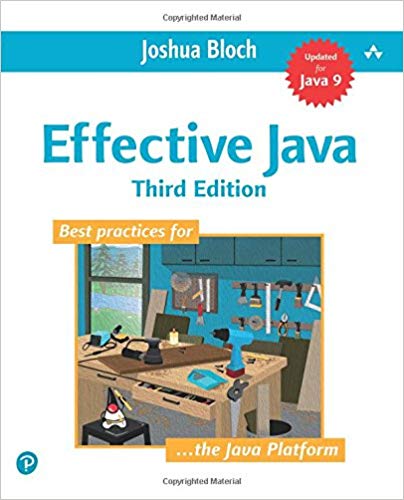
Are you looking for a deeper understanding of the Java programming language so that you can write code that is clearer, more correct, more robust, and more reusable? Look no further! Effective Java™, Second Edition, brings together seventy-eight indispensable programmer’s rules of thumb: working, best-practice solutions for the programming challenges you encounter every day.
Each chapter of Effective Java, Third Edition, consists of several “items,” each presented in the form of a short, stand-alone essay that provides specific advice, insight into Java platform subtleties, and updated code examples. The comprehensive descriptions and explanations for each item illuminate what to do, what not to do, and why.The third edition covers language and library features added in Java 7, 8, and 9, including the functional programming constructs that were added to its object-oriented roots. Many new items have been added, including a chapter devoted to lambdas and streams.
Murach's Java Programming: Training & Reference, 6th edition by Joel Murach
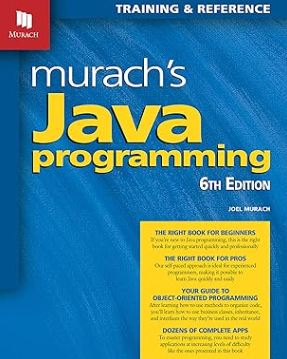
If you want to learn Java programming but don’t know where to start, this is the right book for you. From the first page, our unique self-paced approach will help you build competence and confidence in your programming skills, even if you’re completely new to programming.But this isn’t just a book for beginners! Our self-paced approach also works for experienced programmers, helping you learn Java faster and better than you’ve ever learned a language before. By the time you’re through, you will have mastered all of the Java skills that are needed on the job, including the skills for developing object-oriented applications that use a graphical user interface (GUI) and a database.To make this possible, section 1 of this book presents a 9-chapter course that gets anyone off to a great start building object-oriented applications in Java. Then, the next 3 sections build on that base by presenting more on object-oriented programming, the essentials for developing GUIs, and additional skills that every professional Java programmer should have, including how to work with a database.
Java The Complete Reference, 13th edition by Herbert Schildt and Dr. Danny Coward
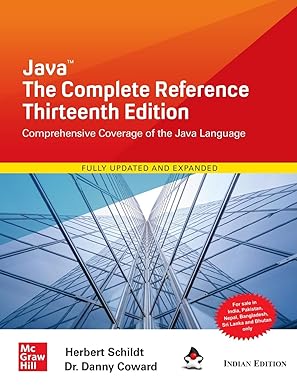
The definitive guide to Java programming—thoroughly revised for Java SE 21 Fully updated for the current version of Java, Java SE 21, this comprehensive guide shows, step by step, how to design, write, debug, run, and administer high-performance Java programs. Inside, bestselling author Herbert Schildt and programming expert Dr. Danny Coward cover the entire Java language, including its syntax, keywords, and libraries. The book lays out cutting-edge development techniques and best practices.
Java: The Complete Reference, Thirteenth Edition features clear explanations, detailed code samples, and real-world examples that demonstrate how Java can be put to work in the real world. JavaBeans, servlets, applets, Swing, lambda expressions, multithreading, and the default interface method are thoroughly discussed. Readers will get full details on all of the latest features and changes in JDK 18 through long-term support (LTS) release JDK 21.
Java How to Program: Early Objects, 11 edition by Paul Deitel & Harvey Deitel
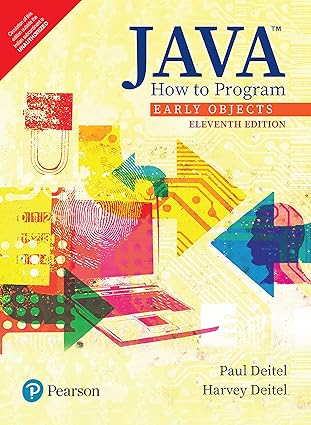
Unparalleled breadth and depth of object-oriented programming concepts.
The Deitels’ groundbreaking How to Program series offers unparalleled breadth and depth of programming fundamentals, object-oriented programming concepts and intermediate-level topics for further study.
Java How to Program presents leading-edge computing technologies using the Deitel signature live-code approach, which demonstrates concepts in hundreds of complete working programs.
Java Cookbook: Problems and Solutions for Java Developers, 5th Edition by Ian F. Darwin
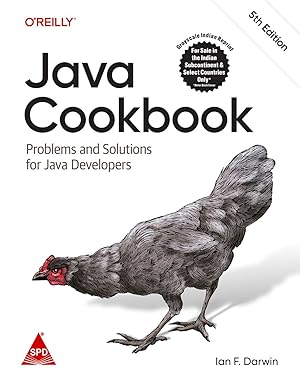
As Java continues to evolve, this cookbook continues to grow in tandem with hundreds of hands-on recipes across a broad range of Java topics. Author Ian Darwin gets developers up to speed right away with useful techniques for everything from string handling and functional programming to network communication and AI.
If you're familiar with any release of Java, this book will bolster your knowledge of the language and its many recent changes, including how to apply them in your day-to-day development. Each recipe includes self-contained code solutions that you can freely use, along with a discussion of how and why they work.
Downloadable from GitHub, all code examples compile successfully. This updated edition covers changes up to and including Java 21. You will:
- Learn how to apply many new and old Java APIs
- Use the new language features in recent Java versions
- Understand the code you're maintaining
- Develop code using standard APIs and good practices
- Explore the brave new world of current Java development.
Java Network Programming: Developing Networked Applications, Fourth Edition by Elliotte Rusty Harold
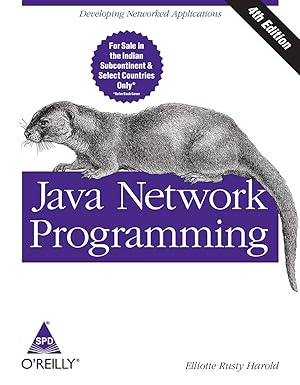
This practical guide provides a complete introduction to developing network programs with Java. You’ll learn how to use Java’s network class library to quickly and easily accomplish common networking tasks such as writing multithreaded servers, encrypting communications, broadcasting to the local network and posting data to server-side programs.
Author Elliotte Rusty Harold provides complete working programs to illustrate the methods and classes he describes. This thoroughly revised fourth edition covers REST, SPDY, asynchronous I/O and many other recent technologies.
- Explore protocols that underlie the Internet, such as TCP/IP and UDP/IP
- Learn how Java’s core I/O API handles network input and output
- Discover how the InetAddress class helps Java programs interact with DNS
- Locate, identify and download network resources with Java’s URI and URL classes
- Dive deep into the HTTP protocol, including REST, HTTP headers and cookies
- Write servers and network clients, using Java’s low-level socket classes
- Manage many connections at the same time with the nonblocking I/O
Head First Design Patterns: Building Extensible and Maintainable Object-Oriented Software, 2nd Edition by Eric Freeman and Elisabeth Robson
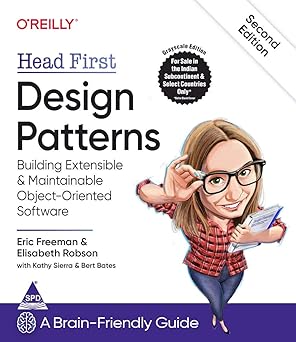
You know you don't want to reinvent the wheel, so you look to Design Patterns: the lessons learned by those who've faced the same software design problems. With Design Patterns, you get to take advantage of the best practices and experience of others so you can spend your time on something more challenging. Something more fun. This book shows you the patterns that matter, when to use them and why, how to apply them to your own designs, and the object-oriented design principles on which they're based. Join hundreds of thousands of developers who've improved their object-oriented design skills through Head First Design Patterns.
Related Books
Murach’s MySQL (4th Edition) by Joel Murach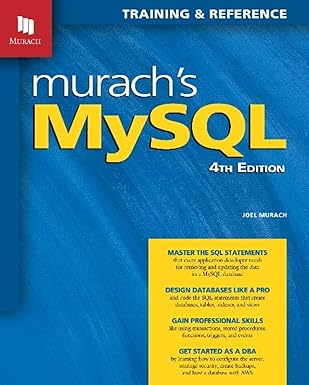
The fourth edition of our best-selling MySQL book works better than ever for teaching SQL and database design. We’ve carefully checked and updated every example to provide you the best possible learning experience. Whether you’re a complete beginner or a SQL expert, you’ll appreciate the easy-to-understand explanations, clear examples, and step-by-step instructions for efficiently using SQL to work with relational databases.